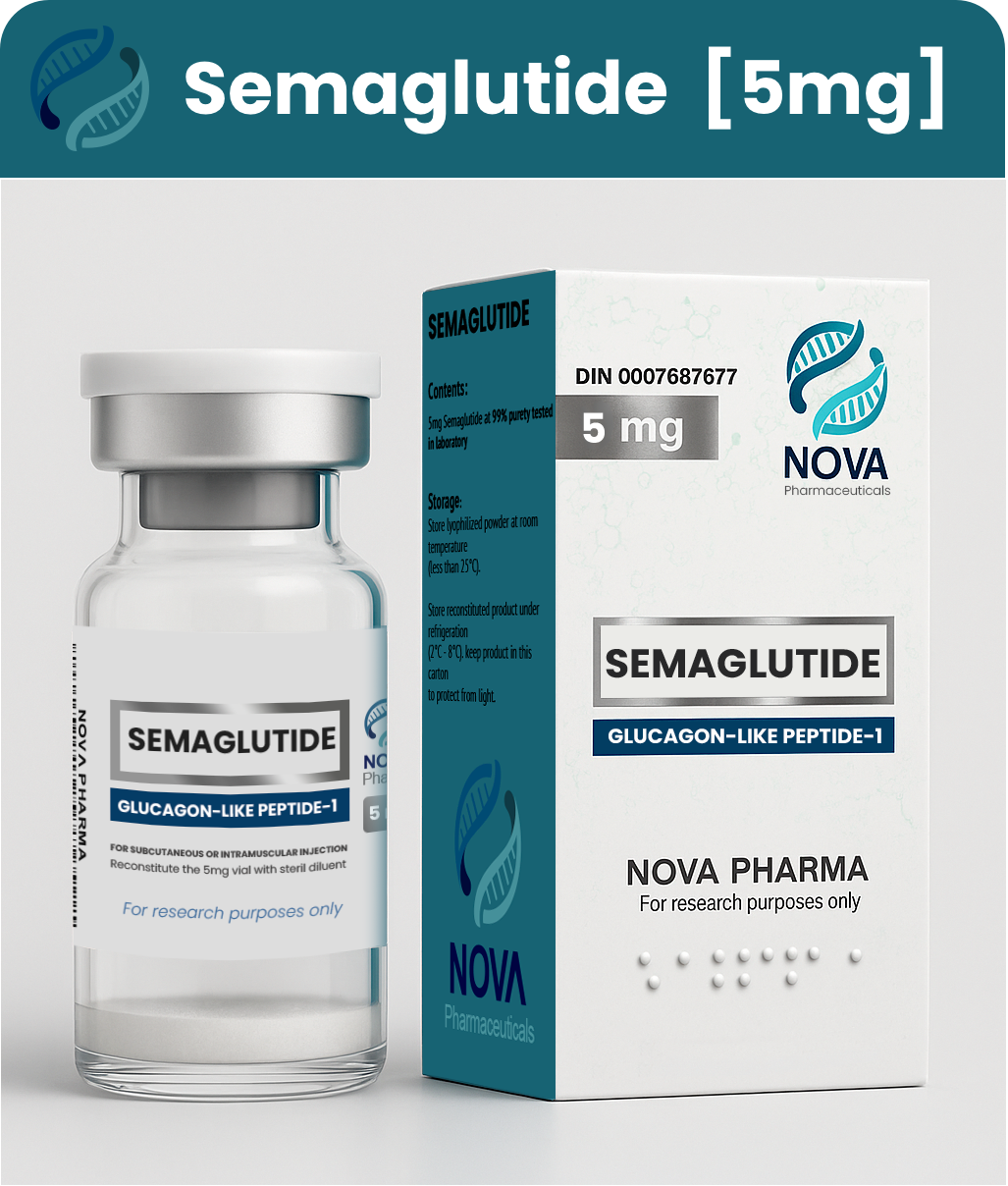
Semaglutide
Agoniste des récepteurs GLP-1 — la référence en gestion du poids. Réduit l'appétit et optimise la fonction métabolique.
Composé
En un coup d'œil
En un coup d'œil
- Concentration
- 5mg
- Pureté
- 99,7 %
- Demi-vie
- ~7 jours
- Voie
- Sous-cutanée, hebdomadaire
- Dose typique
- 0,25–2,4 mg par semaine (titré)
- Conservation
- Lyophilisé : 2–8 °C. Reconstitué : 2–8 °C, ≤28 jours
- Lot actuel
- OLY-2026-04-0118
Semaglutide is a synthetic analog of human glucagon-like peptide-1 (GLP-1), a 31-amino-acid incretin hormone secreted by intestinal L-cells in response to food intake. The molecule has been engineered with three critical modifications from native GLP-1: an amino acid substitution at position 8 (Aib replacing Ala) that confers resistance to dipeptidyl peptidase-4 (DPP-4) degradation, a C-18 fatty diacid chain attached at position 26 via a linker that enables non-covalent binding to albumin, and a minor spacer modification. These structural changes extend its half-life from the native GLP-1's 2-3 minutes to approximately 168 hours (7 days), enabling once-weekly dosing.
Semaglutide binds to and activates the GLP-1 receptor, a G-protein-coupled receptor expressed in pancreatic beta cells, the gastrointestinal tract, the heart, and — critically for weight management — the hypothalamus and brainstem. In the central nervous system, GLP-1 receptor activation modulates appetite by enhancing satiety signaling in the arcuate nucleus and area postrema, reducing hedonic (reward-driven) eating through effects on the mesolimbic dopamine pathway, and slowing gastric emptying to prolong post-meal fullness. Peripherally, semaglutide enhances glucose-dependent insulin secretion, suppresses inappropriate glucagon release, and may improve beta-cell function over time. Its effects on appetite are not merely suppressive — research suggests it recalibrates the homeostatic set-point for food intake.
In the clinical research literature, semaglutide has produced the most robust weight reduction data of any single-agent pharmacological intervention. Phase III trials demonstrated mean body weight reductions of 14.9% over 68 weeks at maximum dosing, with approximately one-third of participants achieving 20% or greater weight loss. Concurrent improvements in cardiovascular risk markers, inflammatory biomarkers, waist circumference, and glycemic control have been consistently documented. Research has also identified effects on hepatic steatosis, obstructive sleep apnea severity, and osteoarthritis-related pain burden.
Semaglutide is suited for researchers investigating metabolic optimization, appetite regulation, body composition modification, and cardiometabolic risk reduction. It is the reference compound in the GLP-1 receptor agonist class and the most extensively studied peptide for weight management applications.
Reconstitute the 5mg vial with bacteriostatic water (typically 2.5ml for a concentration of 2mg/ml). Semaglutide is administered via once-weekly subcutaneous injection. Research protocols typically begin with a dose-escalation schedule: 0.25mg weekly for 4 weeks, increasing to 0.5mg, 1.0mg, and 1.7mg at 4-week intervals, with a maximum research dose of 2.4mg weekly. This gradual titration minimizes gastrointestinal side effects (nausea, which is the most common adverse event). Store reconstituted solution at 2-8C. Lyophilized powder is stable at room temperature but should be refrigerated. A 5mg vial supports approximately 4-8 weeks of research depending on the escalation phase.
Semaglutide is supplied as a lyophilized (freeze-dried) powder and must be reconstituted with bacteriostatic water (BAC water) before use in a research setting.
- Clean the BAC water vial stopper and the peptide vial stopper with an alcohol swab. Allow to dry.
- Draw the required volume of BAC water into a sterile syringe (typically 1–3 mL depending on target concentration).
- Angle the needle so the water runs down the inside wall of the peptide vial. Avoid dispensing directly onto the powder.
- Do not shake. Gently swirl or roll until fully dissolved. Vigorous shaking can denature peptides.
- Refrigerate reconstituted solution at 2–8°C. Most reconstituted peptides are stable 14–30 days depending on compound.
Target concentration determines drawing volume. For dosing math, consult the dosing math guide.
Vérification indépendante en laboratoire
Avis de recherche
Pour usage de recherche et de laboratoire uniquement. Non destiné à la consommation humaine ou vétérinaire. Novo Pharma vend à des chercheurs qualifiés majeurs et expédie uniquement aux adresses canadiennes. Voir avis de non-responsabilité et conditions.
Lire la recherche
Articles de référence du laboratoire qui examinent ce composé.
beginner guides
Acheter des Peptides au Canada : Guide Complet de l'Acheteur 2026 (Ce Qu'il Faut Savoir)
best of
Meilleurs peptides pour la perte de gras 2026 : classement complet (par mécanisme et données probantes)
comparisons
AOD-9604 vs Semaglutide vs HGH Fragment : Comparatif des peptides de perte de gras
Composés similaires.
Voir tous les Peptides
SS-31
25mg
Achetez 3+ : 15 % de rabais
TB-500 5mg
5mg
Achetez 3+ : 15 % de rabais
TB-500 10mg
10mg
Achetez 3+ : 15 % de rabais
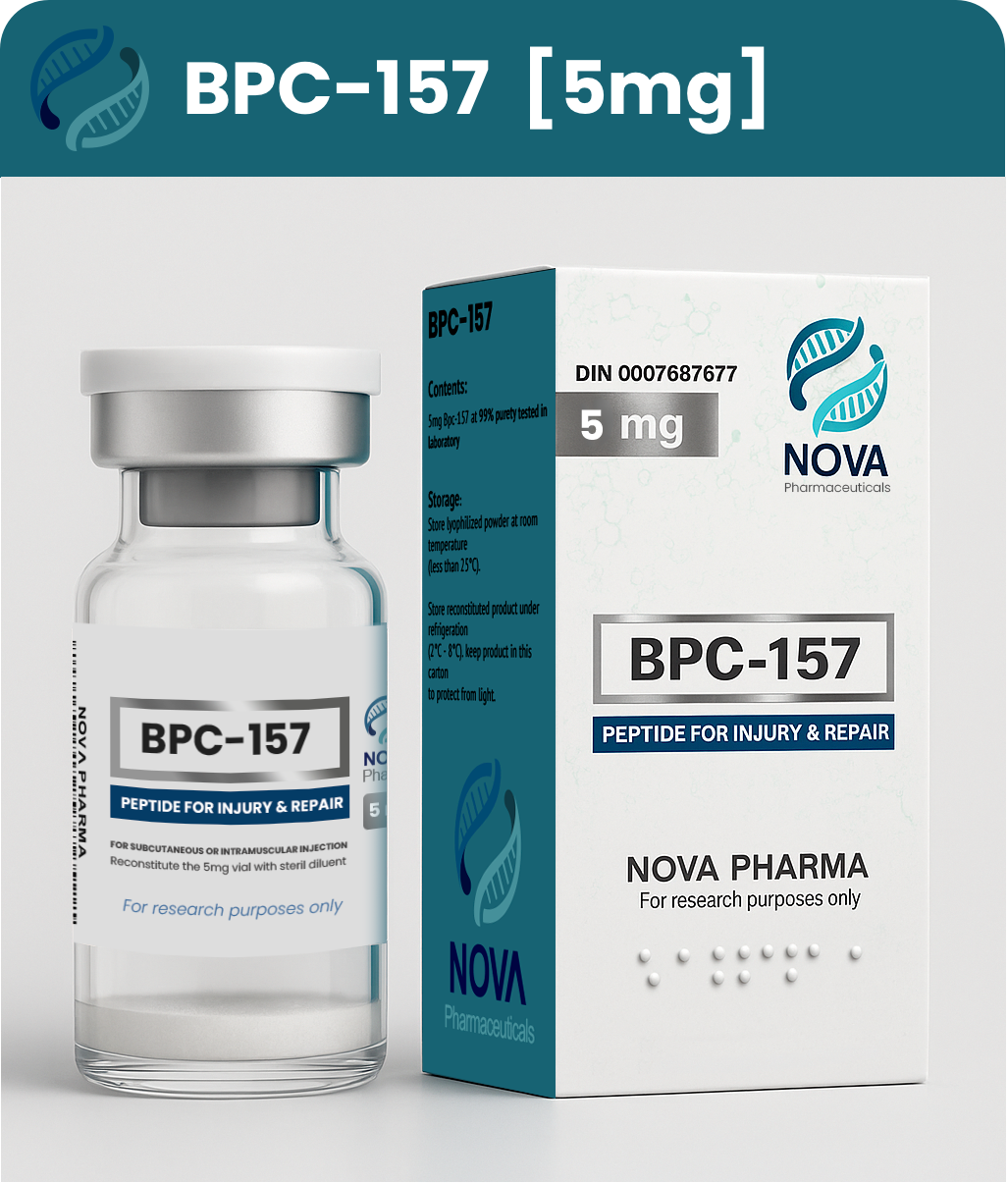
BPC-157 5mg
5mg
Achetez 3+ : 15 % de rabais