NAD+ 1000mg
Nicotinamide Adenine Dinucleotide — cellular energy and longevity molecule. Restores mitochondrial function and DNA repair.
Compound
At a glance
At a glance
- Concentration
- 1000mg
- Purity
- 99.5%+
- Route
- Subcutaneous injection
- Storage
- Lyophilized: room temperature, desiccated. Reconstituted: 2–8°C, ≤30 days.
NAD+ (Nicotinamide Adenine Dinucleotide, oxidized form) is a coenzyme present in every living cell and essential for over 500 enzymatic reactions in human biology. It is not a peptide in the strict sense but is included in the longevity peptide catalog due to its central role in cellular energy metabolism and its prominence in aging research. NAD+ exists in two forms: the oxidized form (NAD+) that serves as an electron acceptor in catabolic reactions, and the reduced form (NADH) that donates electrons to the mitochondrial electron transport chain for ATP production. Intracellular NAD+ levels decline approximately 50% between ages 40 and 60, and this decline has been identified as a key driver of age-related metabolic dysfunction.
NAD+ functions as an essential substrate for three families of enzymes that are central to cellular maintenance: sirtuins (SIRT1-7), which regulate gene expression, DNA repair, and metabolic homeostasis; poly-ADP-ribose polymerases (PARPs), which repair single-strand and double-strand DNA breaks; and CD38/CD157 ectoenzymes, which regulate cellular calcium signaling and immune function. All three enzyme families consume NAD+ as a substrate (not just a cofactor), meaning they deplete the cellular NAD+ pool with every reaction. As NAD+ levels decline with age, competition between sirtuins and PARPs for the shrinking NAD+ supply forces the cell into triage — prioritizing acute DNA repair (PARPs) at the expense of the long-term maintenance functions (sirtuins) that prevent metabolic decline.
Research on NAD+ restoration has produced compelling results across multiple domains. Studies demonstrate that raising NAD+ levels improves mitochondrial function, enhances DNA repair capacity, restores sirtuin activity, improves insulin sensitivity, reduces age-related inflammation (inflammaging), and extends healthspan in animal models. Clinical trials of NAD+ precursors (NMN, NR) have shown improvements in muscle function, cardiovascular markers, and metabolic parameters in human subjects. Direct intravenous NAD+ administration — which the lyophilized powder supports after reconstitution — bypasses the precursor conversion steps and delivers the active molecule directly.
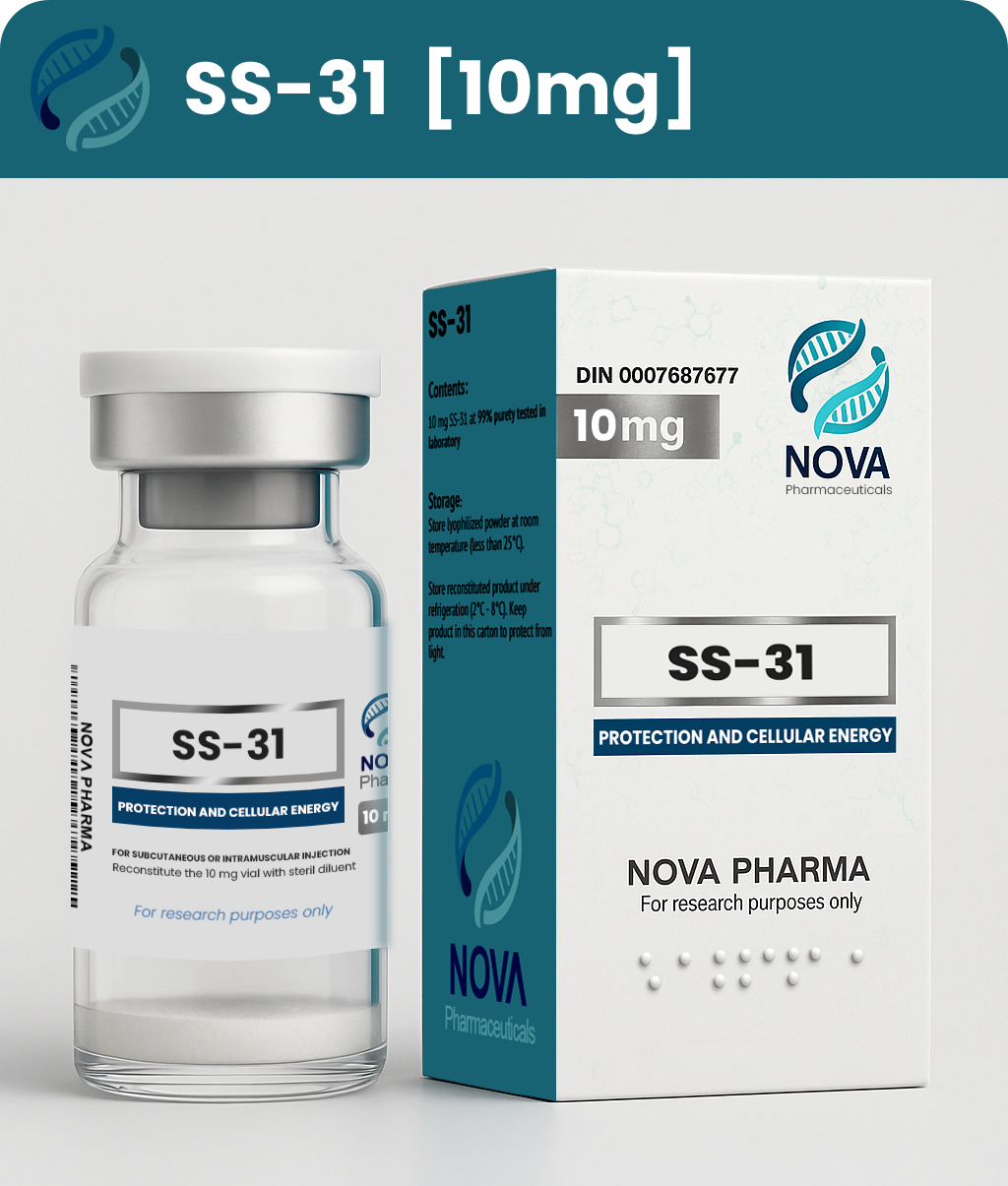
NAD+ is suited for researchers investigating cellular energetics, mitochondrial function, DNA repair, sirtuin biology, and age-related metabolic decline. It is a cornerstone compound for comprehensive longevity protocols and pairs synergistically with SS-31 (mitochondrial membrane stabilization) and Epitalon (telomere maintenance) for multi-pathway anti-aging research.
Reconstitute the 1000mg vial with 10ml bacteriostatic water (yielding 100mg/ml). NAD+ can be administered via subcutaneous injection or intravenous infusion, though subcutaneous is the most common research route for lyophilized formulations. Typical subcutaneous research dosing ranges from 50-200mg per day. NAD+ has a plasma half-life of approximately 30-45 minutes, but intracellular effects persist as the molecule is phosphorylated and incorporated into cellular metabolic pools. Store reconstituted solution at 2-8C and protect from light — NAD+ is light-sensitive and will degrade if exposed to UV. Lyophilized powder should be stored at -20C for long-term preservation. The 1000mg vial provides 5-20 days of research at standard subcutaneous dosing.
NAD+ 1000mg is supplied as a lyophilized (freeze-dried) powder and must be reconstituted with bacteriostatic water (BAC water) before use in a research setting.
- Clean the BAC water vial stopper and the peptide vial stopper with an alcohol swab. Allow to dry.
- Draw the required volume of BAC water into a sterile syringe (typically 1–3 mL depending on target concentration).
- Angle the needle so the water runs down the inside wall of the peptide vial. Avoid dispensing directly onto the powder.
- Do not shake. Gently swirl or roll until fully dissolved. Vigorous shaking can denature peptides.
- Refrigerate reconstituted solution at 2–8°C. Most reconstituted peptides are stable 14–30 days depending on compound.
Target concentration determines drawing volume. For dosing math, consult the dosing math guide.
Independent lab verification
Research disclaimer
For research and laboratory use only. Not for human or veterinary consumption. Novo Pharma sells to qualified researchers of legal age and ships to Canadian addresses only. See disclaimer and terms.
Read the research
Reference articles from the lab covering this compound.
how to
Semaglutide Face & Hair Loss: How to Prevent 'Ozempic Face' (2026 Guide)
Semaglutide face aging and hair loss explained — causes, prevention strategies, and the peptide support stack (GHK-Cu, NAD+, BPC-157) that protects skin and hair during GLP-1 weight loss therapy.
stacks
Epitalon: The Telomere-Lengthening Peptide for Longevity (+160% Search Growth)
Epitalon (epithalon) reactivates telomerase to lengthen telomeres — the primary aging clock. Learn dosing protocols, Russian clinical data, and longevity stacking.
stacks
NAD+ Therapy: The Longevity Molecule Your Body Stops Making
NAD+ declines 50% by age 50, accelerating aging at the cellular level. Learn how NAD+ injections restore mitochondrial function, activate sirtuins, and support DNA repair — with protocols, dosing, and Canadian sourcing.