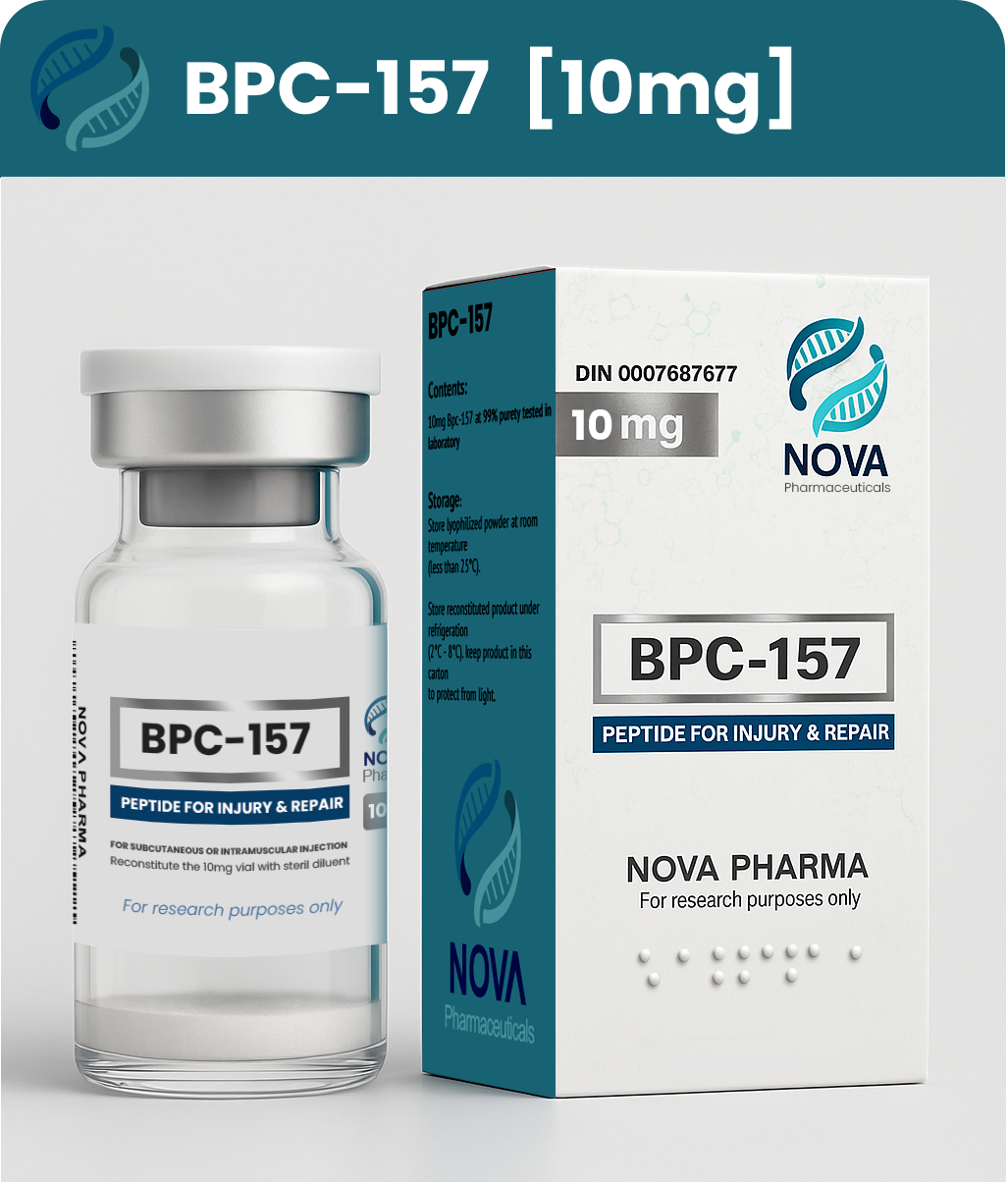
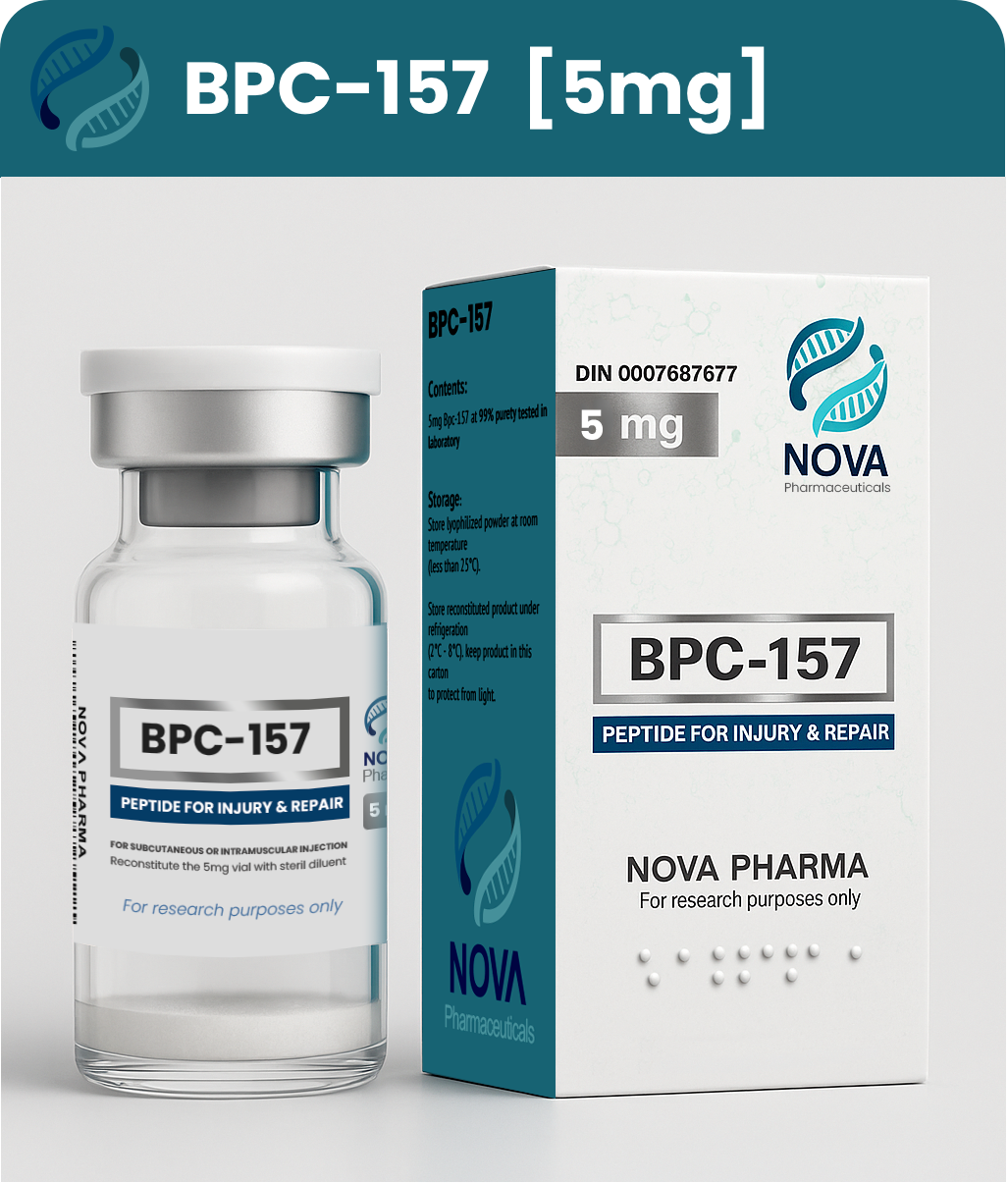
BPC-157 5mg
Body Protection Compound-157 — the ultimate healing peptide. Repairs gut, tendons, ligaments, and muscle tissue systemically.
Or check the lab's public registry directly: janoshik.com/results →
Compound
At a glance
At a glance
- Concentration
- 5mg
- Purity
- 99.8%
- Half-life
- 30–50 min (subcutaneous)
- Route
- Subcutaneous / Oral
- Typical dose
- 250–500 mcg daily
- Storage
- Lyophilized: room temp, desiccated. Reconstituted: 2–8°C, ≤30 days
- Current batch
- OLY-2026-04-0127
Body Protection Compound-157 is a synthetic pentadecapeptide consisting of 15 amino acids (Gly-Glu-Pro-Pro-Pro-Gly-Lys-Pro-Ala-Asp-Asp-Ala-Gly-Leu-Val) derived from a protective protein found in human gastric juice. Unlike most peptides of exogenous origin, BPC-157 is a partial sequence of a naturally occurring compound, which contributes to its remarkably favorable safety profile across the published literature. It is classified as a stable gastric pentadecapeptide — stable because it resists degradation in gastric acid, a property that distinguishes it from virtually every other bioactive peptide.
BPC-157 exerts its effects through multiple intersecting pathways. It upregulates growth hormone receptor expression in tendon fibroblasts, stimulates the FAK-paxillin signaling cascade to promote cellular migration into wound beds, and activates the nitric oxide system to enhance local blood flow to damaged tissues. At the molecular level, it modulates the expression of early growth response protein 1 (EGR-1) and its downstream targets including collagen, cytokines, growth factors, and mediators of granulation tissue formation. Researchers have documented its capacity to counteract the effects of NSAIDs on the gastric lining, restore intestinal mucosal integrity, and promote angiogenesis — the formation of new blood vessels — in damaged tissues.
In the research literature, BPC-157 is recognized for its systemic tissue-protective and regenerative properties. It has demonstrated accelerated healing of tendons, ligaments, muscle tissue, bone fractures, and skin wounds. Its gastroprotective effects are particularly well-documented: studies show significant improvement in models of inflammatory bowel conditions, gastric ulceration, and intestinal anastomosis healing. Researchers investigating musculoskeletal recovery have noted accelerated return of function in Achilles tendon transection models, quadriceps crush injuries, and medial collateral ligament damage.
BPC-157 is best suited for researchers investigating tissue repair and recovery protocols. Common research applications include tendon and ligament injury recovery, gut healing and intestinal permeability reduction, post-surgical tissue repair, and musculoskeletal rehabilitation. It is frequently paired with TB-500 in healing-focused research protocols due to their complementary mechanisms — BPC-157 acting locally at injury sites while TB-500 works systemically.
Each 5mg vial should be reconstituted with bacteriostatic water (typically 2ml for a concentration of 2.5mg/ml). Once reconstituted, store at 2-8C and use within 28 days. Lyophilized (unreconstituted) vials are stable at room temperature for several months but should ideally be refrigerated. BPC-157 is administered via subcutaneous injection, ideally near the site of interest. It has a relatively short half-life of approximately 4 hours, which supports twice-daily administration in most research protocols. Typical research dosing ranges from 200-500mcg per administration.
BPC-157 5mg is supplied as a lyophilized (freeze-dried) powder and must be reconstituted with bacteriostatic water (BAC water) before use in a research setting.
- Clean the BAC water vial stopper and the peptide vial stopper with an alcohol swab. Allow to dry.
- Draw the required volume of BAC water into a sterile syringe (typically 1–3 mL depending on target concentration).
- Angle the needle so the water runs down the inside wall of the peptide vial. Avoid dispensing directly onto the powder.
- Do not shake. Gently swirl or roll until fully dissolved. Vigorous shaking can denature peptides.
- Refrigerate reconstituted solution at 2–8°C. Most reconstituted peptides are stable 14–30 days depending on compound.
Target concentration determines drawing volume. For dosing math, consult the dosing math guide.
Common misconceptions
What it isn't.
- An anabolic-androgenic steroid (no androgen-receptor activity).
- A peptide hormone (no receptor of its own; mechanism is paracrine).
- Approved by Health Canada as a human therapeutic.
- A substitute for adequate sleep, nutrition, or training adaptation.
- A long-acting agent — peripheral half-life is ~30–50 minutes.
- Supported by large-scale human RCT data; most evidence is rodent-model.
Independent lab verification
Research disclaimer
For research and laboratory use only. Not for human or veterinary consumption. Novo Pharma sells to qualified researchers of legal age and ships to Canadian addresses only. See disclaimer and terms.
Read the research
Reference articles from the lab covering this compound.
beginner guides
Buy Peptides in Canada: Complete 2026 Buyer's Guide (What to Know First)
Complete 2026 guide to buying peptides in Canada. Legal status, vendor red flags, popular peptides (BPC-157, semaglutide, ipamorelin), storage, reconstitution, and what to look for in a Canadian source.
best of
Best Peptide Stacks 2026: Protocols That Work Together (By Goal)
Best peptide stacks for 2026 ranked by goal: fat loss, healing, anti-aging, muscle growth, sleep & cognition. Complete protocols with timing, dosing & duration.
best of
Best Peptides for Healing & Recovery 2026: Ranked by Injury Type
Discover the best peptides for healing ranked by injury type. BPC-157, TB-500, and targeted protocols for tendons, muscles, gut, joints, nerves, and post-surgery recovery in 2026.